Showing posts with label Butterfly Facts. Show all posts

Friday, March 23, 2012

Some Facts Monarch Butterfly

Into their larval stage monarch caterpillars feed almost exclusively on milkweed in addition to being adults manage to get their nutrients through the nectar of flowers. The monarch will return to areas full of milkweed to put their eggs upon the plant. The milkweed they prey on as a caterpillar is truly a poisonous toxin which is held in their. It's this that helps to make the monarch taste so terrible to predators.

Monarch Butterfly

Some Facts Monarch Butterfly


Some Facts Monarch Butterfly


Some Facts Monarch Butterfly


Some Facts Monarch Butterfly


Monarch butterflies could travel involving fifty-100 miles per day; it can take up to two months to complete their journey to winter season habitats.

Millions of monarch butterflies make the journey down to Mexico to perch for the winter. Throughout the migration tens of thousands will land on one tree in certain locations along their migratory route. Monarchs can easily produce four generations during one summer. The first three generations will have life spans from two-six weeks and will continue moving north. During this time they will mate and have the next generation which will keep on the northward migration. The fourth generation of monarchs is different and can live up to 9 months. These are the butterflies that will migrate south for winter to either Mexico or southern California.

Wednesday, December 21, 2011

Sulphurs Butterfly Videos

Sulphurs Butterfly Videos


In this picture we can see sulphurs butterfly while acting, the sulphur butterfly is staying at the d red flower amongs the plants and then fly, in the videos above we can also know the male or female of this sulphur butterfly, the yellow big butterfly as a tittle, we can see some beautiful pictures of it with HD resolution.

Honeybee & Sulphur Butterfly


As the tittle this video is so cute and interesting that is uploaded by STORMEDIA in YouTube channel, I like this video although the duration is less than 1 minute but it's quite good recording. As the tittle we see a cute honeybee perch on yellow flower and following by also cute sulphur butterfly alight on the same flower, it's quite beautiful scene.


Sulphur Butterflies


And the last video is about some many of sulphur butterflies laying on the earth/land and then fly around them, it's also quite beautiful moment of sulphur butterflies. Here they are some cute and beautiful videos of suphurs butterfly and if you wish you can click the full screen on the corner of each videos.

Wednesday, September 7, 2011

Butterfly Fact in Food


Butterfly Fact in Food

Butterfly Fact in Food

Butterfly Fact in Food

Butterfly Fact in Food

Butterfly Fact in Food


Facts on Butterflies

Butterfly Fact in Food

The beautiful wings of the butterfly are seen in nearly every country in the world. The vibrant colors and patterns and fascinating metamorphosis from the caterpillar make this an interesting insect to study. Butterflies are also the world's second largest pollinator after the bee, so it is a worthy creature about which to learn.

Butterflies taste with their feet. They use this skill to determine suitable leaves on which to lay their eggs, so the hatching caterpillars have something to eat. Butterflies have a liquid-only diet consisting of water, nectar and juice from fruits. They eat through a straw known as a proboscis. Monarch butterfly larvae (or caterpillars) eat milkweed, which gives them a horrible flavor to deter predators such as birds. By Lisa Walker

Butterfly Fact Lifestyle


Butterfly Fact Lifestyle

Butterfly Fact Lifestyle

Butterfly Fact Lifestyle

Butterfly Fact Lifestyle


Facts on Butterflies

Butterfly Fact Lifestyle

The average life span for butterflies is one month, although this varies greatly depending on size and species. Some live for as long as 10 months. The weather and exposure predators also determine the length of a butterfly's life. Butterflies are cold-blooded creatures, so they need a warm climate in which to live. If they get too cold, they become unable to fly. Butterflies are found living all over the world, except for Antarctica. By Lisa Walker

Facts on Butterflie's Body


Facts on Butterflie's Body

Facts on Butterflie's Body

Facts on Butterflie's Body

Facts on Butterflie's Body

Facts on Butterflie's Body


Facts on Butterflies

Facts on Butterflie's Body

The beautiful wings of the butterfly are seen in nearly every country in the world. The vibrant colors and patterns and fascinating metamorphosis from the caterpillar make this an interesting insect to study. Butterflies are also the world's second largest pollinator after the bee, so it is a worthy creature about which to learn.

Butterflies, like many other insects, have their skeletons on the outside of their bodies. This is called the exoskeleton and it protects the body and stops it from drying out. The body is made up of three sections -- the head, thorax and abdomen. Butterflies have three pairs of legs, but in some species such as the monarch butterfly, the front pair are not visible as they are kept tucked up under the body. The wings of butterflies are covered in thousands of tiny scales, which creates the colors and patterns. When monarch butterflies in North America are born in late summer and early fall, they migrate south to warmer weather. By Lisa Walker

Butterfly General Fact


Butterfly General Fact


Butterfly General Fact


Butterfly General Fact


Butterfly General Fact


Butterfly General Fact


Facts on Butterflies


Butterfly General Fact

The beautiful wings of the butterfly are seen in nearly every country in the world. The vibrant colors and patterns and fascinating metamorphosis from the caterpillar make this an interesting insect to study. Butterflies are also the world's second largest pollinator after the bee, so it is a worthy creature about which to learn. By Lisa Walker

There are an estimated 165,000 species of butterfly, although this figure varies depending on whether subspecies are counted. There is no agreed scientific difference between butterflies and moths. The distinction tends to be that butterflies are more brightly colored, and moths only come out at night. The smallest species of butterfly is the Western pygmy blue, which is about 1/2 inch across, and the largest is the Queen Alexandra bird-wing, which is about 11 inches across.

Interesting Facts for and about Butterfly Gardens


Interesting Facts for and about Butterfly Gardens

Interesting Facts for and about Butterfly Gardens

Interesting Facts for and about Butterfly Gardens

Interesting Facts for and about Butterfly Gardens

Interesting Facts for and about Butterfly Gardens


Interesting Facts for and about Butterfly Gardens

A butterfly garden is one of the easiest gardens to plant and maintain. Its sole purpose is to attract butterflies. With just a little research you can start planning your butterfly garden.

Colors
Butterflies can see more colors than humans. A colorful garden is easier for butterflies to find, and the nectar-filled flowers will encourage them to stay a while.

Temperature Sensitive

Butterflies are cold-blooded and cannot regulate their internal temperature. However, they do enjoy sunning themselves for warmth. Open, sunny areas in a butterfly garden provide places for butterflies to rest and enjoy a little sunbathing.

Puddle Jumpers

Butterflies will congregate at puddles. Rocks with bowl-like formations to trap water encourage butterflies to linger in the garden for a drink. Adding a bit of stale beer or sweet drink to the water from time to time is a big attraction.

Butterfly Gardens Interesting Facts


Butterfly Gardens Interesting Facts

Butterfly Gardens Interesting Facts

Butterfly Gardens Interesting Facts

Butterfly Gardens Interesting Facts

Butterfly Gardens Interesting Facts


Butterfly Gardens Interesting Facts
 
A butterfly garden is one of the easiest gardens to plant and maintain. Its sole purpose is to attract butterflies. With just a little research you can start planning your butterfly garden.


Here, There and Everywhere

Butterflies can be found throughout the United States and so can plants that attract butterflies. Varieties of nectar plants that attract butterflies and host plants that encourage egg-laying are native to and can be grown in a wide range of climates zones in the U.S.

Size Doesn't Matter

A butterfly garden can be as big as a football field or the corner of a patio. A couple of the right plants in containers on the front steps are enough to attract a colorful, fluttering display.

Tropical Butterfly Garden


Tropical Butterfly Garden

Tropical Butterfly Garden

Tropical Butterfly Garden

Tropical Butterfly Garden

Tropical Butterfly Garden

Tropical Butterfly Garden


How to Create a Tropical Butterfly Garden
By Joan Norton


Butterfly gardens are becoming more popular as a source of beauty and environmental conservation. Purple passion vine, pentas, firebush and blue plumbago grow well in a tropical butterfly garden. Tropical climate temperatures rarely rise above 93 degrees F and have humidity in the 77 to 88 percent range. Monarch, swallowtail, cloudless sulphur and zebra longwing butterflies thrive in the moist humidity of tropical gardens. Butterflies have a wide range of flight and are important in the pollination process of many endangered plant species. There are several steps to creating a tropical butterfly garden.


Instructions

 
Things You'll Need

* Paper and pencil
* Plants
* Rocks
* Bucket
* Logs


1. Map your garden to determine soil types, sun and shade areas. Choose a garden area sheltered from wind that receives at least six hours of direct sun per day.

2. Choose plant varieties that vary in color, season of bloom and height to provide foraging opportunities and habitats year-round.


3. Provide cover and shelter for the butterflies with logs, broad-leafed plants and shrubs. Plan garden areas with large, diverse groups of plants. Please see Resources for a complete list of plants that attract butterflies.


4. Plant caterpillar food plants such as parsley, spicebush, hackberry and clover to provide food for the insects before they mature.


5. Create a water source for butterflies by burying a bucket in the ground with equal portions of sand and water. Periodically replenish the water. Place several rocks nearby to provide a resting place.


Tuesday, April 26, 2011

Monarch Butterflies


Monarch Butterflies
Monarch Butterflies
Monarch Butterflies

Monarch Butterflies
Monarch Butterflies

Monarch Butterflies
Monarch Butterflies

Monarch Butterflies Monarch Butterflies

Monarch Butterflies
Monarch Butterflies

Monarch Butterflies
Monarch Butterflies

Monarch Butterflies
Monarch Butterflies

Monarch Butterflies
Monarch Butterflies


Monarch butterfly is one type of butterfly that is very much information about it and it's also one type of butterfly tha is used in many cases like in the symbol of butterfly ceature and in films and animations. The monarch butterfly may be the most widely recognized of all American butterflies with its distinct orange, black, and white wings. While beautiful, this coloring actually sends a warning to predators that the monarch is foul tasting and poisonous.

Monarch butterfly is very popular in the butterfly world and habitats, it is because Monarch butterfly is very familiar and characteristic of it's body and colors, that are usually orange and black. it is also because Monarch butterfly migration is one of the longest migrating creatures on Earth. Beginning in August, over 200 million eastern monarchs (those living from the Rockies to the Atlantic Ocean.

Found throughout the United States, as well as Mexico and Canada, one of the most notable characteristics about the monarch is the astonishing 3000 mile journey some will make in the fall to their wintering grounds in the Sierra Nevada Mountains of Mexico or to southern California, depending on which part of the United States or Canada they migrate.

Monarch Butterfly Facts


Monarch Butterfly Facts
Monarch Butterfly Facts, Butterfly Facts
Monarch Butterfly Fact

Monarch Butterfly Facts, Butterfly Facts
Monarch Butterfly Fact

Monarch Butterfly Facts, Butterfly Facts
Monarch Butterfly Fact

Monarch Butterfly Facts, Butterfly Facts
Monarch Butterfly Fact

Monarch Butterfly Facts, Butterfly Facts
Monarch Butterfly Fact

Monarch Butterfly Facts, Butterfly Facts
Monarch Butterfly Fact


The Monarch is one of the longest migrating creatures on Earth. Beginning in August, over 200 million eastern monarchs (those living from the Rockies to the Atlantic Ocean) migrate from their summer feeding and mating grounds in Mexico, where they spend the winter before returning to the United States in late February and March to begin the cycle of life again. In all the monarchs will travel over 3,000 miles as a group over several generations each year. While one Monarch will not make the 3,000 mile trip it will do its part to eat milkweed, mate and continue the cycle its children, grand children, great grand children and great great grandchildren will ultimately finish.

The Monarch knows instinctively where to go and how to get there. It is still a mystery exactly how this information is passed on. Monarchs live in all states and reproduce wherever they can find enough Milkweed to support their young. Monarchs are not pests and will not eat anything but Milkweed. They do not hurt crops, ornamental trees or in any way upset the balance of Nature in areas they are introduced. Monarchs are the State Butterfly of Alabama, Idaho, Illinois, Texas, West Virginia and Minnesota.

Tuesday, April 12, 2011

Butterfly Life Cycle


Butterfly Life Cycle

Butterfly Life Cycle

Butterfly Life Cycle

Butterfly Life Cycle

Butterfly Life Cycle

Butterfly Life Cycle

Butterfly Life Cycle


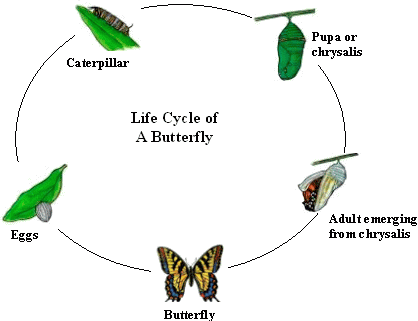
Butterfly Life Cycle is about this simple cycle:

First is a egg, egg is a tiny, round, oval, or cylindrical object, usually with fine ribs and other microscopic structures.

Second, is a caterpillar or larvae, it is like in the picture above that caterpillar is like worm, after egg then egg will become this larvae or caterpillar

Third, is pupa or he chrysalis, The chrysalis (or pupa) is the transformation stage within which the caterpillar tissues are broken down and the adult insect's structures are formed. The chrysalis of most species is brown or green and blends into the background. Many species overwinter in this stage.

Last, is the adult or it is just complete butterfly that colorful butterfly creature and it has wings and can fly, like Monarch butterfly and other butterfly types.

So this is the pictures of butterfly live cycle, that from an little egg, then egg become larvae or caterpillar, and the caterpillar then will become pupa, and the pupa will become a butterfly, or adult butterfly.

Definition List

Bloggers - Meet Millions of Bloggers

Followers